Skip to content

On a winter morning in North West Tasmania – where rain can blow sideways and paddocks turn to puddles overnight – Rob moves the herd with quiet efficiency. The system bends to whatever the season delivers, with cows stood off in the toughest winter conditions to protect the best paddocks, and resilient cows carrying milk through the dry of summer. It’s practical, gritty farming – the culmination of a 13‑year journey that began with a bold leap across the Tasman.
Rowan brought a deep New Zealand grounding – nine years as a 50:50 sharemilker in the Waikato, including breeding work that saw him become the only breeder to have two bulls inducted into the LIC Hall of Fame: Solaris and Sierra. Rob’s path was different. Raised on a small sheep unit in Northumberland, England, he moved to New Zealand at the age of 18 and built his career managing herds there. The duo teamed up in 2011 and made the leap to Australia in 2013, bringing together pragmatic stock sense and disciplined business thinking.
They arrived in northern Victoria in 2013 with a clear goal: to own their own dairy farm. At the time, the numbers stacked up – lower entry costs than New Zealand, warm weather, water on tap, and a buoyant milk price under the Murray Goulburn co‑operative. “It was our dream,” Rowan recalls. “Fifty hectares, 150 Jersey cows, tidy infrastructure – everything set up just right.”
But the honeymoon didn’t last. Water prices spiked, dry years bit hard, and Murray Goulburn’s collapse shifted the risk‑reward balance. “We could have stayed. But we’d have been standing still.” Rowan says. They sold the dream – and went looking for a better model.
Patience and resilience
The first herd they sourced for Victoria had no known breeding and horns – a far cry from the well‑bred Jersey herd they had initially signed up for (and later walked away from when they had deteriorated before settlement). “We paid $800 a head for in‑calf cows, took the horns off, and got on with it,” Rowan says. “Not pretty – but it got us started.”
Within a year they blanketed the herd with Solaris, (Rowan’s Hall of Fame KiwiCross® bull) a bold move Rowan would refine in hindsight. “Over average Jerseys, we’d have been better to kick off with a Friesian for hybrid vigour.” That pivot – toward a predominantly Friesian‑cross herd – would become one of their compounding advantages in tougher seasons.
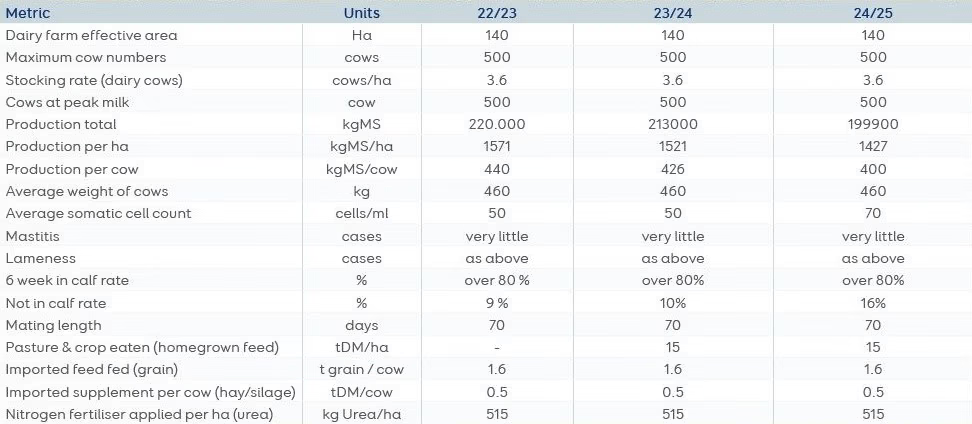
The early years were also a battle against somatic cell count (SCC). “We averaged around 300,000 at the start,” Rob says. It took strategic herd testing and breeding discipline to turn it around.”
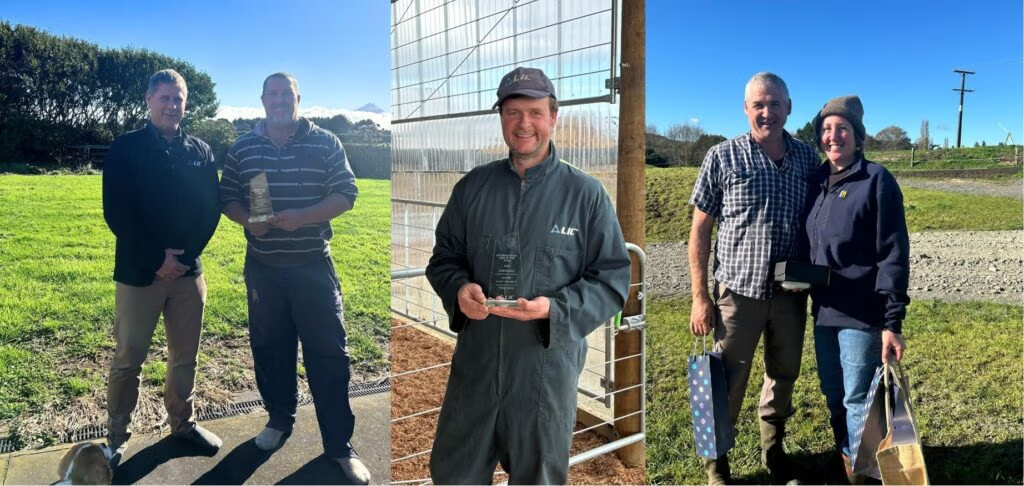
Today, they average 50,000 SCC, a shift reflected in a run of Milk Quality awards – including multiple Dairy Australia Gold/Silver Star achievements and a 2025 corporate milk quality award (the best of 15 farms).
Finding a better model: Gippsland’s 50:50 bet
Their next move was a 50:50 sharefarming role in South Gippsland, milking around 250 cows for elderly owners. “That experience crystallised it,” Rowan says. “Sharefarming was the path – scalable, aligned, and good for building equity and skill.”
As they looked to step up, they found that standardised 50:50 contracts were rare on the mainland – different interpretations, varied terms, lots of ambiguity. Tasmania, however, offered something different.
Across Bass Strait: Kiwi systems, clear contracts
In Tasmania, the pair connected with a corporate operation run Kiwi‑style, under an operations manager who understood New Zealand’s Federated Farmers 50:50 template. The alignment was immediate.
Starting with 350 cows, they quickly stepped up to a 500‑cow platform, where they’ve been building for five years.
Farming the wettest paddocks (and the driest summers)
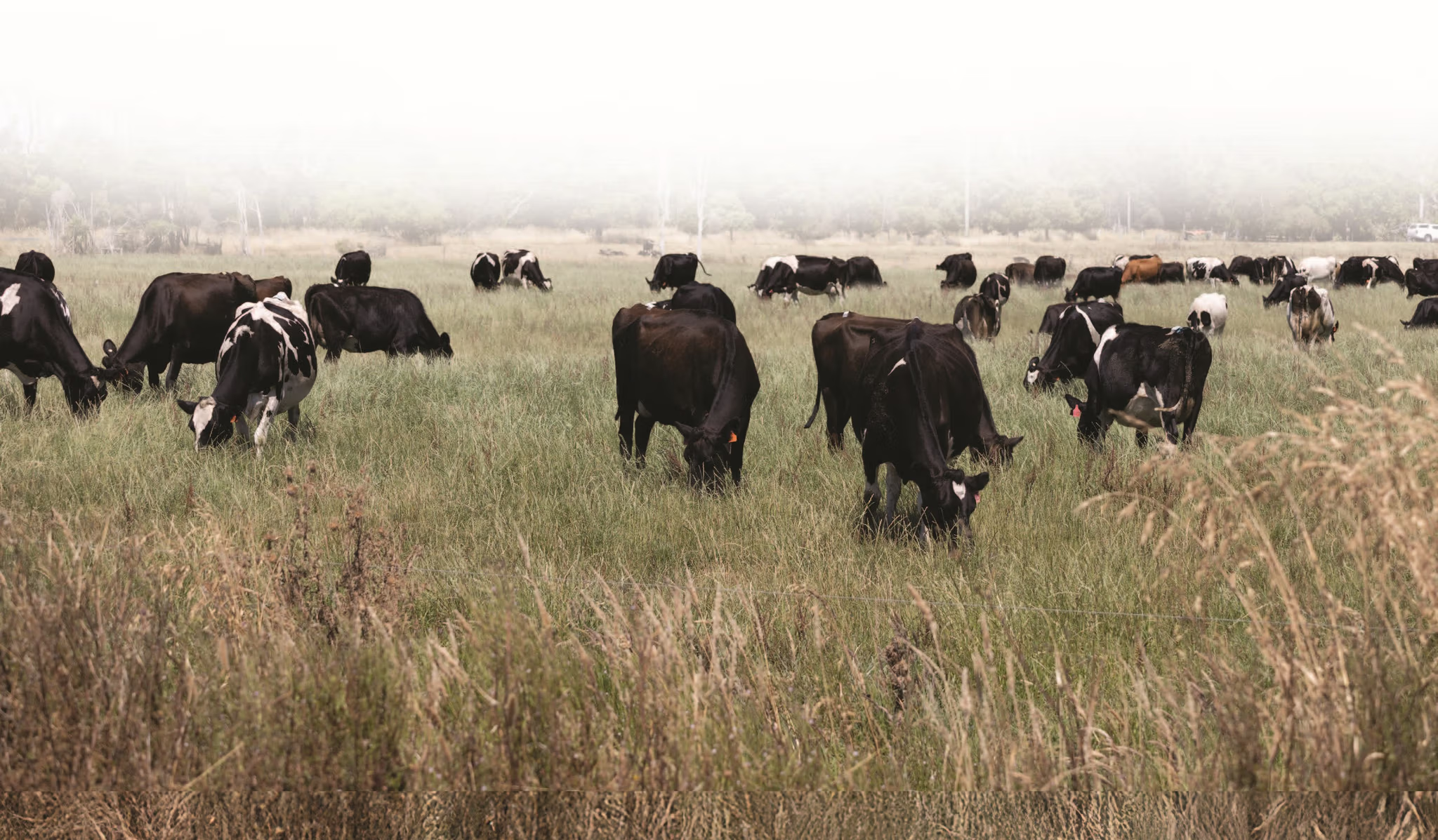
The Togari district is among the wettest in Tasmania, and their farm is the wettest in the district. It’s a management puzzle they’ve learned to solve:
• Winter: stand cows off and use sacrifice paddocks to protect the base.
• Feed policy: about 1.6 tonnes of grain per cow per year – “not low, not over the top.”
“We try to keep costs tight,” Rob says. “The herd’s genetics help; LIC crossbreds hold on longer when it turns dry.”
Building a better herd
From a low base, the herd has been consistently lifted:
• Breeding discipline: elite sires for years; the Fast Forward Team® for the past two seasons.
• Homebred replacements: raising their own heifers since 2013.
• Hybrid vigour: a deliberate shift toward Friesian‑cross resilience.
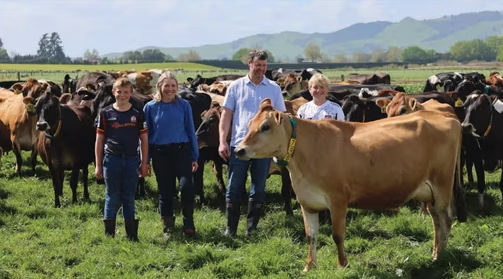
This is a herd designed to work in the real world – wet winters, uneven summers, and no irrigation. “We started with cows we weren’t proud of,” Rowan says. “Now it’s a herd we’ve built, carefully, year after year.”
The business lens: Clear roles, shared decisions
Rowan now works full‑time off‑farm for LIC Australia, while Rob leads day‑to‑day operations, supported by one full‑time and one casual staff member. Their decisions are shared 50:50, true to the partnership they’ve built. Beyond the farm gate, Rob and Rowan have invested in rental properties in both Australia and New Zealand.
A guiding principle came early from their operations lead: “If I’m making money, then you’re making money. We’re all happy.” It stuck – and it explains their approach to inputs, pasture management, breeding, and growth.
Key information