Skip to content

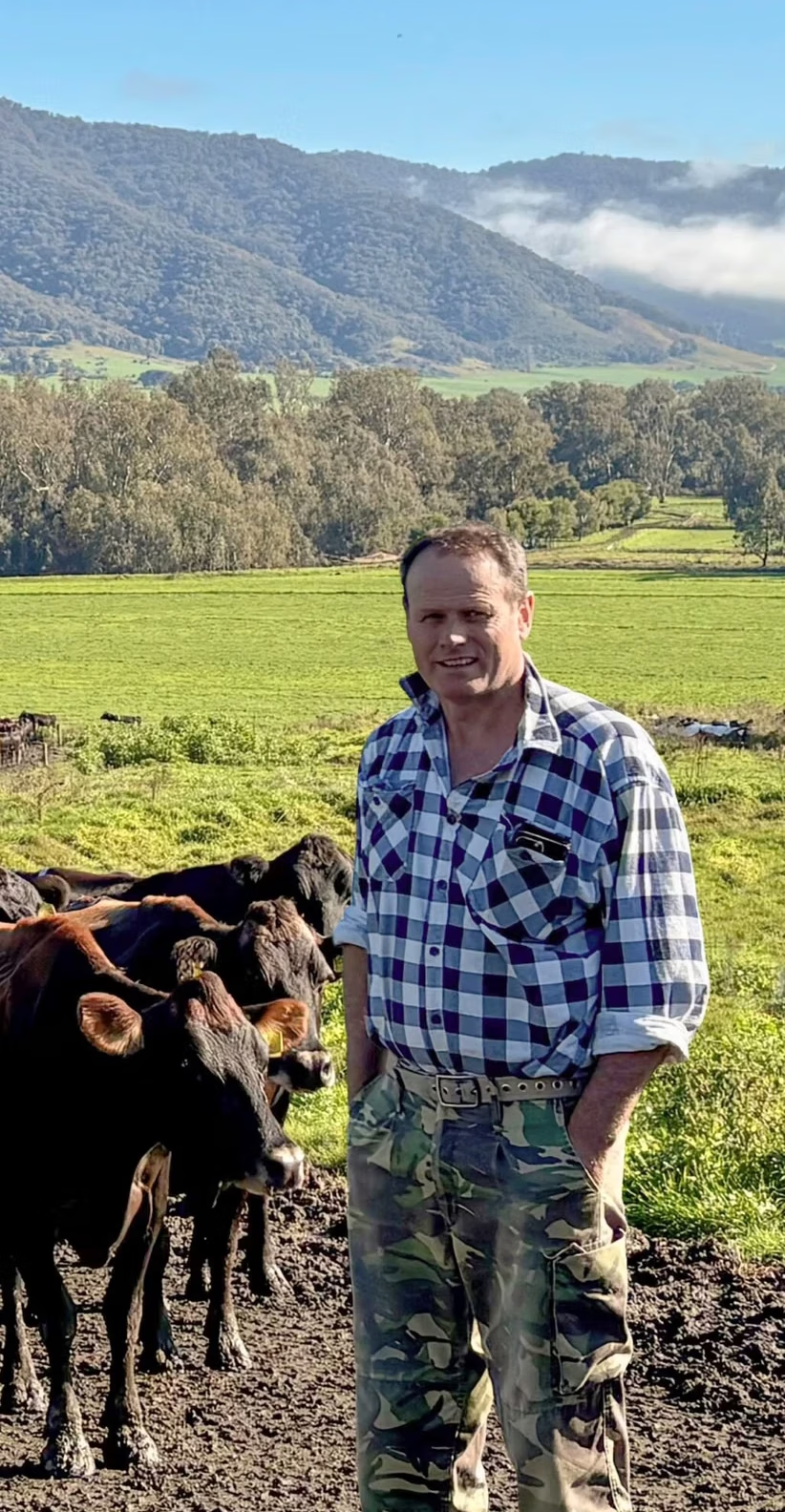
After representing Great Britain as an Olympic rower at the 1996 Olympic Games, Richard stepped away from high-performance sport and eventually found his way to Victoria’s Mitta Valley, having first discovered a passion for dairying in New Zealand. While the setting has changed dramatically, the principles remained the same: discipline, resilience and a relentless work ethic.
That same mindset underpins the way he approaches farming – where performance, consistency, and continuous improvement are central to success.
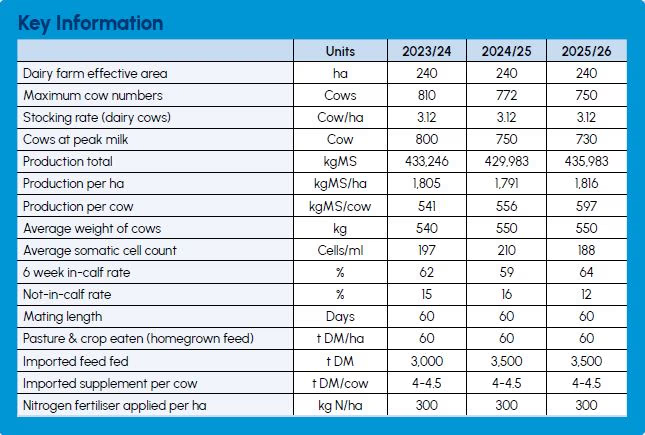
Set on rolling, irrigated country in northeast Victoria, Mitta Agricultural Company has built a dairy operation that reflects this philosophy in action. Under Richard’s leadership, the farm produces close to 2 kilograms of milksolids per cow per day, with a split-calving system built around a simple principle – profitability is driven by margin per cow, not production at any cost. That clarity has shaped decisions right across the farm, from infrastructure through to genetics and feeding.
The dairy itself reflects a deliberate return to simplicity. Installed in the mid-1980s, the old rotary remains largely unchanged. Rather than chasing the latest technology, the focus has been on reliability and functionality.
The setup is straightforward, with basic pulsators and minimal complexity, ensuring the system runs consistently with fewer breakdowns or disruptions.
By keeping things simple, the team can focus on performance where it matters most – in the cows and in day-to-day management.
“Do the basics well and keep it simple” says Richard.
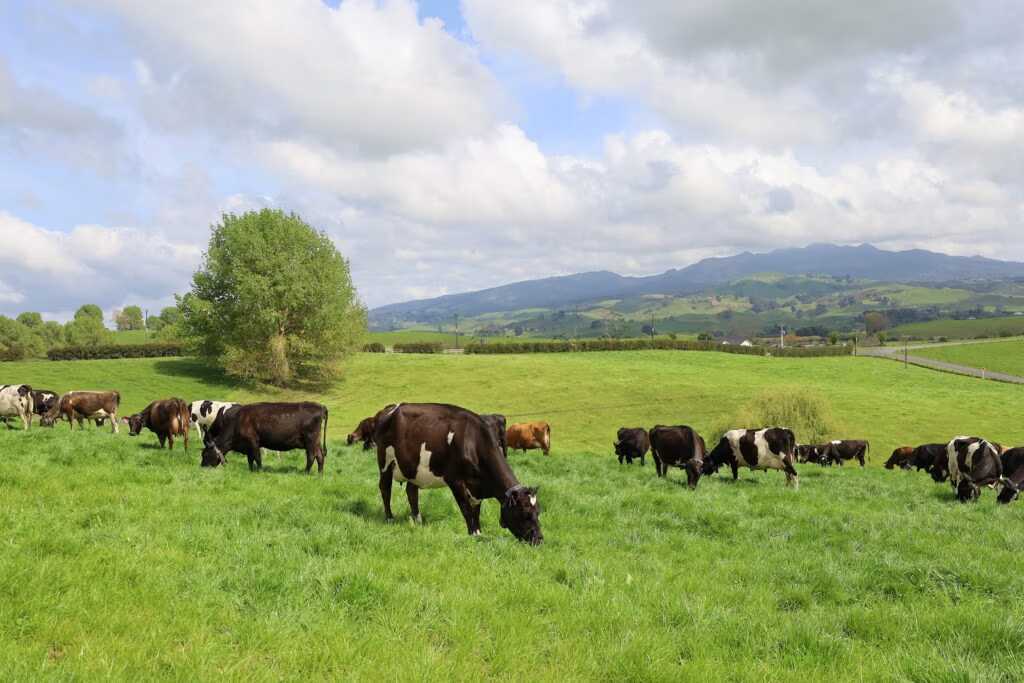
That clarity of purpose extends to the type of cow the system is built around. Rather than chasing extremes in size or production, the focus is on efficient, functional animals that suit the environment. Medium-framed cows, typically around 500 to 550 kilograms, perform best. They move easily through the rotary, hold condition well, and place less pressure on paddocks. Over time, the herd has shifted towards the use of KiwiCross® bulls, improving uniformity and delivering cows with strong rumen capacity, good temperament and high fertility. These are cows designed to last and perform consistently.
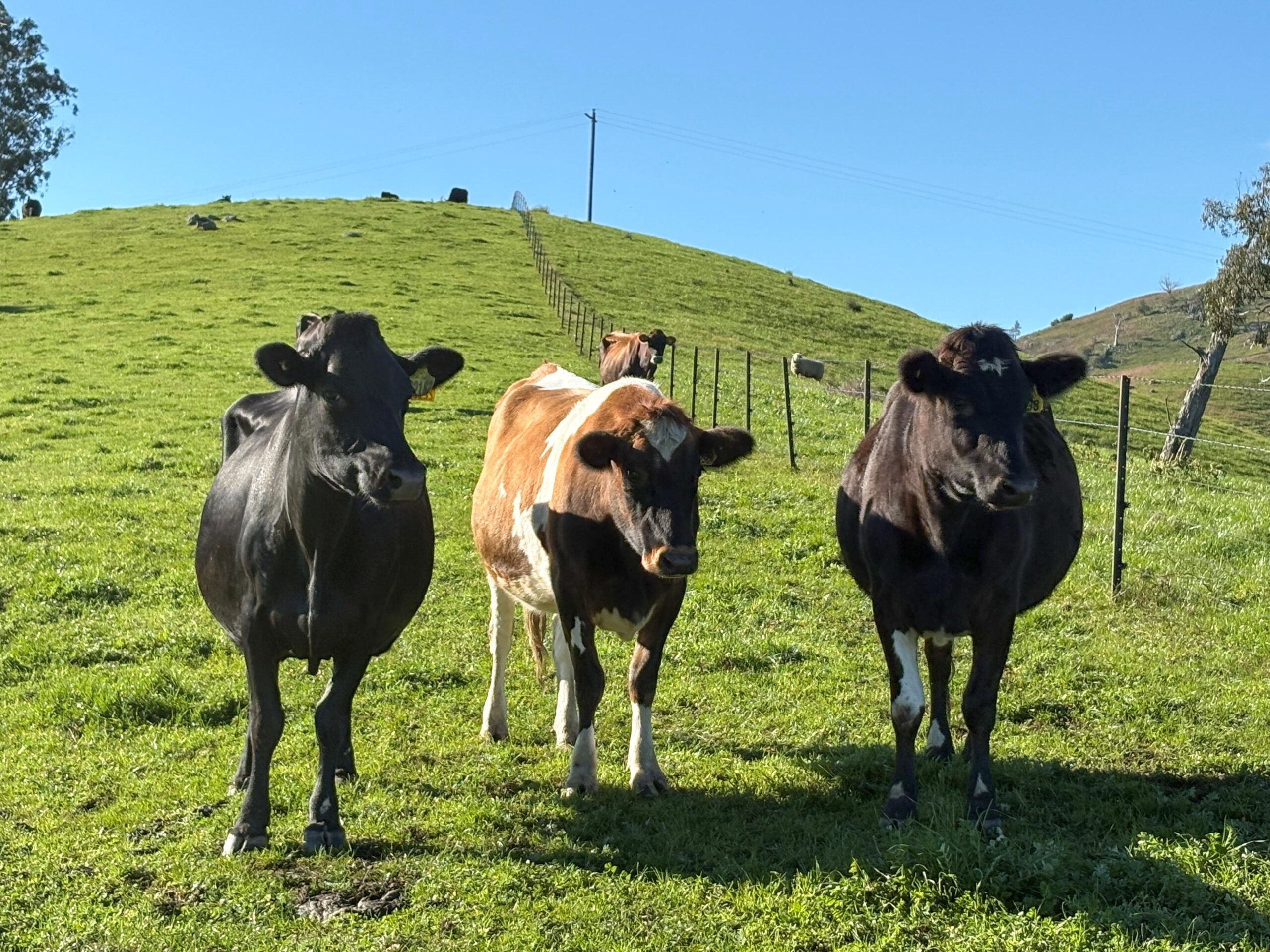
Fertility is treated as a non- negotiable trait within the system. Breeding decisions are tightly controlled, with a strong focus on selecting from first-calving animals and removing those that fail to meet expectations. Animals are given an opportunity to prove themselves, but not repeatedly. This disciplined approach has lifted overall herd performance and ensured resources are directed toward the most productive animals.
A major driver behind this success is the emphasis placed on youngstock development. From birth, every calf is monitored closely, with weights recorded regularly and growth tracked against clear benchmarks. Heifers are only joined once they reach sufficient size, ensuring they enter the milking herd with the strength and capacity needed to perform. The results are visible in the animals themselves – strong, well-grown heifers with the rumen capacity to convert feed efficiently from an early age.
It’s an area Richard believes many farmers still underestimate, despite its impact on long-term herd performance. “Too many people underestimate how important well-grown youngstock are,” he says. “If you get the start right, everything else follows.”
While the infrastructure may be simple, the data systems are anything but. The farm uses integrated platforms to track individual animal performance, paddock histories, and overall herd metrics. Every animal is recorded from birth, including weights, treatments, movements, and production data.
“We want to know everything – where a cow’s been, what she’s done, how she’s performing.”
This information feeds into daily decision-making, from identifying underperforming cows to refining feeding strategies.
A custom-built ‘live matrix’ tracks herd status in real time – milking cows, dry cows, treatments, and production – giving staff a clear snapshot of the operation every day.
Paddocks are also monitored, with grazing history, fertiliser use and associated costs recorded and analysed. This level of visibility allows for informed, timely decision-making and ensures issues can be identified and addressed quickly.
Feeding for margin, not volume
Rather than chasing total litres, the farm targets profitability per cow. “It’s all about margin. Not how many litres you produce – but how much it costs to produce them,” says Richard.
Feeding decisions are grounded in economics as much as nutrition. Feed is carefully balanced to deliver optimal energy intake, with cows consuming around 22kg of dry matter per day, targeting 200-240 megajoules of energy.
The ration includes silage, canola, almond hulls, DDG, and pasture, adjusted depending on seasonal conditions. Almond hulls have proven particularly valuable.
“They stabilise our fat test and help stretch the feed supply. It’s like doubling your silage.” Staff are trained to understand feed cost versus output at an individual cow level – ensuring profitability remains central to decision-making. Operating in Australia brings additional challenges, particularly extreme heat and variable rainfall. Summer temperatures regularly exceed 40 degrees celsius, placing pressure on both cows and pasture. The system has been designed with resilience in mind, reducing reliance on irrigation and maintaining flexibility in feed supply. Nutritional strategies play a key role in supporting the herd through these conditions, allowing production to remain steady even in demanding environments.
Reproduction is managed with similar precision. The farm operates a fully artificial insemination-based programme, with no bulls used on-farm. Heifers and cows undergo up to three rounds of AI before pregnancy testing, delivering strong in-calf rates and a tight calving pattern that maximises days in milk and simplifies seasonal management.
Strong people and processes underpin the system. Clear procedures ensure consistency across the operation, while staff understand not only what to do, but why it matters.
Younger team members are building advanced skills, including artificial insemination, supporting both individual development and the long-term strength of the business.
Looking ahead, there is also an eye on diversification, with opportunities such as hazelnut production being explored. However, the core philosophy of the farm is unlikely to change. By focusing on efficient cows, prioritising fertility, investing in youngstock, using data to guide decisions, and managing for margin rather than volume, the system continues to evolve in a way that is both practical and sustainable.
For Richard, the link between elite sport and farming is clear. Success comes from mastering the basics, maintaining discipline, and adapting when needed. Whether on the water or on the farm, the principle remains the same: control what you can, stay consistent, and keep moving forward.
The ideal cow: Efficient, fertile and functional
When asked why he chooses New Zealand Genetics for an Australian farming system, Richard’s answer is straightforward.
“For us, it comes down to system fit rather than chasing individual traits. LIC genetics are designed for pasture- based systems, and that aligns closely with how we operate, where efficiency per hectare and per kilogram of feed is more important than absolute production per cow.”
What Richard values most in KiwiCross® sired animals is their balance.
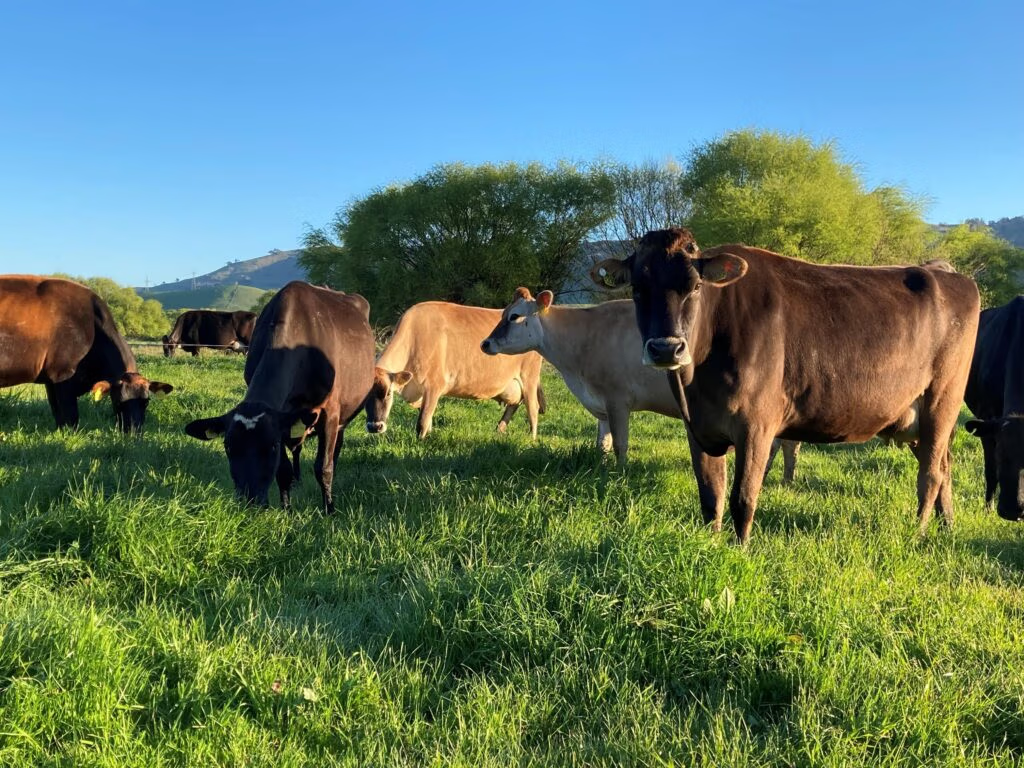
“We’ve found the crossbred cow to be a more balanced animal – strong fertility, tighter calving patterns, good body condition, and the ability to convert pasture into milksolids without needing to be heavily propped up by inputs. That reliability is where the value sits for us.”
A key part of that confidence comes from the depth of research behind the breeding programme.
“LIC has invested heavily over a long period in data, genomic selection and whole-herd performance across large pasture-based systems. That scale and consistency of focus is hard to match, and it shows in the reliability of the animals coming through.”
LIC’s breeding approach places real emphasis on whole-system efficiency. Traits such as fertility, survival and feed conversion are not secondary considerations – they are central to the breeding objective.
Over time, that compounds into a herd that is easier to manage, more predictable, and ultimately more profitable in a pasture-based system.”
Richard is quick to acknowledge that Australian genetics have an important role, particularly in higher-input and more intensive systems. However, for his operation, crossbred animals continue to deliver the combination of fertility, efficiency and durability he is looking for.
“It’s less about one being universally better and more about which genetics are
truly aligned with the system you’re running. For us, the LIC approach fits that brief.”